While ByteDance has built an unmatched vertical pipeline by pairing TikTok with its native editor, CapCut—streamlining short-form creation with seamless audio integration, automated captions, and instant cloud publishing—that frictionless mobile loop breaks down when scaling to substantive projects. Microsoft has attempted to carve out its own consumer footprint by bundling Clipchamp into the Windows 11 and Microsoft 365 ecosystem, but both platforms remain fundamentally optimized for rapid, lightweight assets. For modern creators managing high-bitrate 4K footage, multi-cam setups, and extensive timelines, editing long-form video demands significant local compute power, robust scratch-disk management, and dedicated proxy workflows.
The friction between agile mobile ecosystems and the hardware-intensive reality of long-form production leaves creators straddling two worlds: relying on ByteDance and Microsoft for quick-turn distribution, yet tethered to traditional desktop non-linear editors (NLEs) and massive local storage arrays to survive heavy post-production loads.
An ecosystem that offered creation and publishing is honestly the one thing that had been missing from social media platforms for the last 20 years. And ByteDance suddenly did it, and the internet exploded with much more content. Weekly vlogs, weekend recaps, gym videos, and at the center of a majority of video content conversations were users discussing the ease-of-use of Capcut both on phone and with even more buffed up power on the desktop app. Capcut create an easy button, not just for video editing, but for growth on a growing TikTok app. For me personally, the reason I was slow to adopt Capcut wasn’t because it was bad, necessarily, but because it was so easy that it removed any real in-depth knowledge or need-to-know of how to edit the videos and no one seemed to care.
The same way that 2009’s “There’s an App For That Motto” made accessing everything from your phone easy, CapCut’s massive library of templates meant that the decision fatigue was more around which template versus digging and experimenting into how to do the thing. In early 2023, the video editing market was held by a grouping of 5 apps (FaceTune, Splice, Picsart, VSCO and Lightroom)1 with Capcut having just 4% marketshare. According to AppIntelligence, that number had an atomic explosion up to 42% by October of 2024.
And then they started to charge more, reducing access to features, gating some of the great features behind paywalls. Today, the free version of CapCut is no longer available on Desktop, but can be purchased at $89.99/year, or the Commerce plan can be locked in for $249.99/year. At over 23 MIL downloads, CapCut created a dependency on what I call an easy button and then forced that dependency into paying the man at the gate.
Get CapCut Desktop or iOS Today
Everything Is A Subscription Now
You’re not just paying the man at the gate once, though. You’re paying him monthly. it’s not lost on me that Capcut not only offered great features for free, but also did not tether us to our desktops to make amazing edits. Editing from the phone or tablet has always been in my workflow so I understand, but increasing price and cutting access also meant losing stored data and access to drafts within the tool itself. I also have to mention the changes to CapCut’s Terms & Conditions2, which gives them access and rights to your videos in perpetuity.
Video editing today, whether general editing or clipping, has, in itself, become a million-dollar industry that is relying on us chasing the algorithm, shooting gigs upon gigs of video, and being bottlenecked at the editing level. I hate to say it, but video editing is a trap.
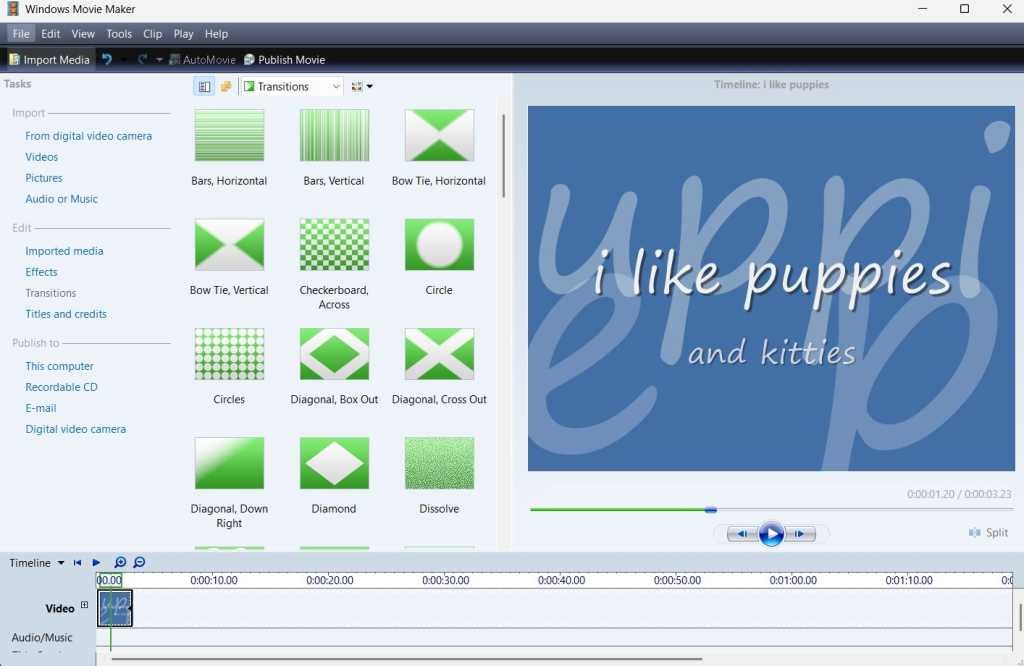
Sadly, I fear, Windows Movie Maker would never do me like this.
Adobe did it first, and while it is far more pricey, I can admit that Adobe’s ecosystem gives a lot of valuable tools. If you’re a template-style creator, though, Premiere Pro might be pretty complex and also requires a lot of time in front of the good ol’ opened laptop. Not to mention the other apps in the Creative Cloud might be overkill.
ByteDance’s clamp down on CapCut has left a huge hole in the editing system and trying to learn new apps while still delivering the style, quality, and volume that was being produced between 2022 and 2024 is a challenge. And that’s why simplistic “yap” videos and people sitting in their cars enters the chat.

The Pains Of the Race To Create
They said AI was going to change everything, and indeed it did.
Not only has the volume of AI-generated content gone up, but the ability to influence the public has always increased in quantity and quality (sort of). According to First Page Sage3, 50% of online news articles are generated or heavily assisted by AI. The news. Now, think about the feeds.
The influence to post more, create more, and how to create more has become the core focus of content creation rather than creating new content as a whole. Here’s a hook. Here’s a LUT. Here’s a camera. Here’s a link.
We live in an age where the January 2025 TikTok ban made people say, “Maybe now those Influencers will get real jobs” and now people are saying, “If I didn’t have income, I would use AI to set up a faceless influencer page”. The contradiction isn’t a bug, it’s actually the feature - we’re being squeezed into a funnel where the only true means of moving forward is to create content through the pipeline that starts with creating video on expensive equipment, storing said videos in expensive clouds, and editing the videos on expensive editing software.
How it’s gotten worse is that almost 50% of the video content4 market chose to use an easy button over actually learning the craft. While it isn’t everybody’s problem, it has definitely become a problem everybody has (read that again). And maybe what’s not being satisfied with the CapCut easy button is now being taken care of with the Higgsfield5 button.
Creators are being pushed and pulled into their next quick hit, which is ultimately to create at scale using AI. Rarely are creators creating what they would like to see in the world, it seems everyone is just creating to talk about what could be created. It’s weird.
The issue isn’t necessarily that the “Easy Button” is bad. I think it goes deeper than that. I think the easy button has created a pretty complex problem, one that’s obviously got to get solved by either a) mastering the easy button to the point of being able to do it at unbelievable scale (e.g. becoming a video editor); b) completely outsourcing the video editing overseas for relatively low-cost in USD; c) completely overhaul your entire video production and content development to AI or finally, d) do nothing and continue at a steady pace that works for you and your audience.
If we zoom in on the first option, there’a complicated question and complicated answer. How do we bring value when we are solving a $249.99-per-month problem with a salaried or contracted role?
Everyone needs an editor, that’s the easy part. But what is everyone willing to pay?
Sadly it appears, the entire market, which praises hard work and volume, has been disrupted by an easy button.