
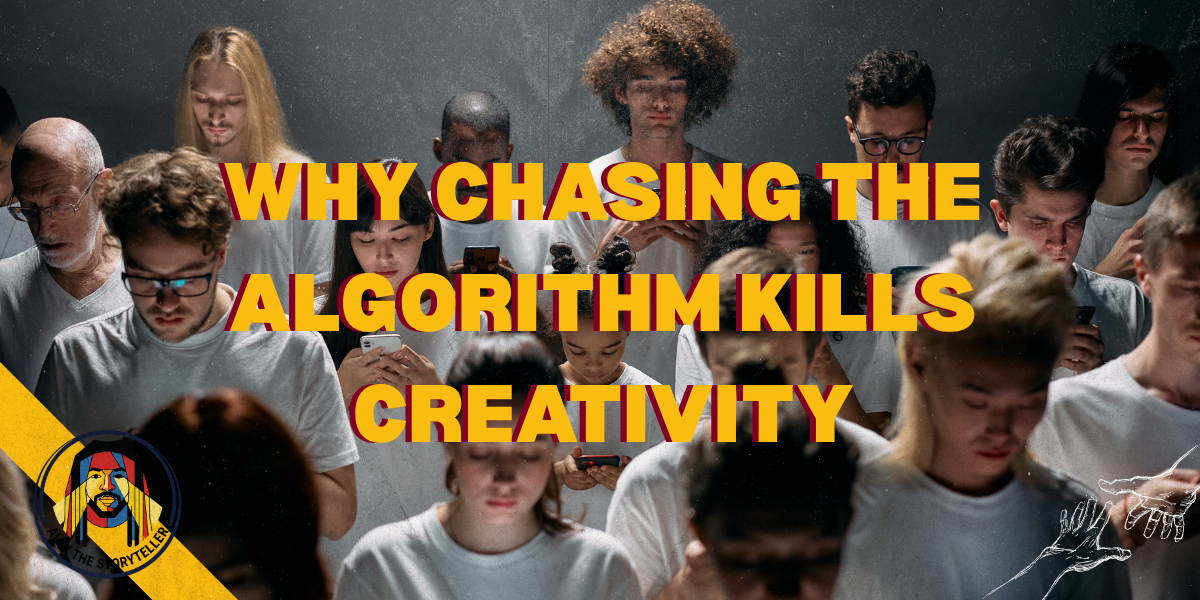
It hasn’t even been a full year since I stepped away from TikTok, but jumping back on revealed a digital landscape that feels eerily dystopian.
On the earlier internet, creators posted raw projects, unpolished BTS cuts, and experimental series simply with the vibe of exhibition, as if it were just a piece straight out of the portfolio with the call out of: ”I just needed y’all to see this.” It was context-free, highly individual, and creatively sincere. That largely held true until algorithmic hyper-optimization took full ownership of digital culture.
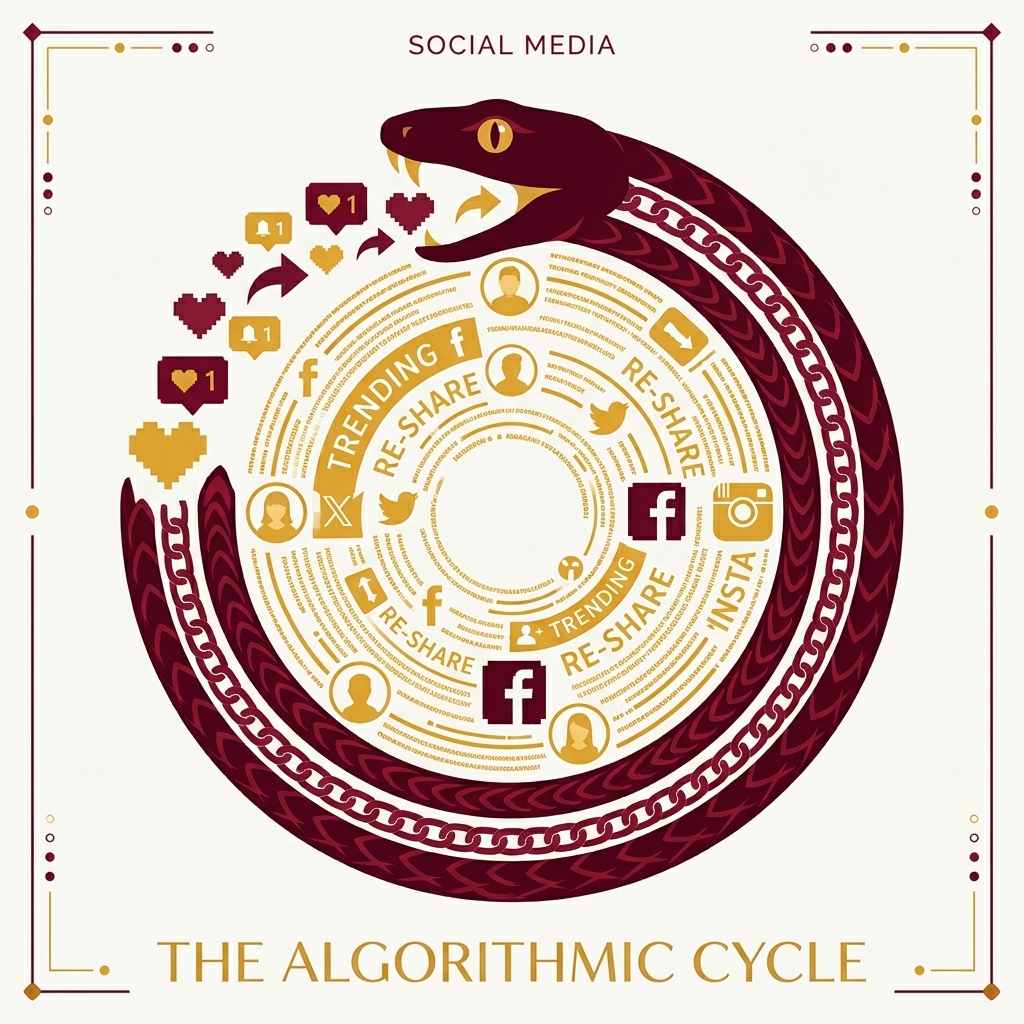
Today, the feed is the embodiment of the snake eating its own tail. Content creating and consuming itself.
It is the human version of the Dead Internet Theory: an endless loop where self-appointed experts sell growth playbooks to other experts, who repurpose (or flat out steal) that advice to sell to an audience trying to figure out how to grow. It’s the human equivalent of AI Jesus receiving thousands of automated bot comments on Facebook.
@ ♬ -
The entire modern feed is fixated on growth to the point that the content itself is about growth, usually produced by profiles whose own momentum has completely stalled but might look impressive to newcomers. Inspiration without hyper-accelerated metrics is treated as worthless.
And the mandate is always the same: make it look effortless.
Choose a topic. Pick a day. Batch record 40 clips with hook templates sourced from ChatGPT. Post dozens of short-form reels dissecting “growth,” commanding someone’s attention for all of 0:13 seconds.
Because that’s the modern creative ceiling: thirteen seconds of rented attention.
Or was it eight?
The Biggest Lie On The Internet
There are two grandiose lies ever told on the internet:
1. That J. Cole and Kendrick Lamar were actually dropping that collaborative album.
2. That the human attention span has shrunk to 8 seconds.
The “eight-second attention span” myth has been repeated since 2015 to justify the systematic destruction of depth. In fact, the research that suggested the so-called "Goldfish Theory" was actually put out by a survey conducted by Microsoft and the survey question was simple: “When nothing is occupying my attention, the first thing I do is reach for my phone". 77% of the recipients aged 18-24 responded with "yes".
Our cognitive capacity hasn’t deteriorated; our digital environments have simply been engineered for weaponized overstimulation.
Once upon a time, your feed was chronological. It had a definitive physical boundary. You reached the bottom, the interface quietly told you that you were caught up, and you closed the app.
Then came the algorithmic cascade:
- The infinite scroll.
- Suggested content engines.
- Ads disguised as native posts.
- Separate notifications designed to pull you into separate sub-feeds.
We are told to negotiate with an Algorithm as if it’s the troll gatekeeping the bridge in Three Billy Goats Gruff. When you accept the false premise that attention spans are impossibly short, you start believing that only shallow, high-velocity hooks can survive, but virality is not quality. When only a small bit of your active audience ever organically sees what you publish, you are dealing with intentional platform throttling, not an audience or content quality issue.
The Big Tech playbook operates on a four-step loop:
1. Establish the Ethos: Convince the market that human attention is broken (”You only have 0:08 seconds”).
2. Move the Goalposts: Demand absurd output thresholds to qualify for reach or platform monetization.
3. Reward the Gamers: Elevate a handful of operators who manufacture commodity volume, setting a precedent for everyone else.
4. Drive Platform MAUs: Secure free promo from millions of creators desperate to feed the engagement machine, accepting that this is the best playbook there is.
Expertise became the new tax for relevance. Channels that once showcased ambitious end products shifted to documenting the process, then shifted again to selling a $47 course on how to copy the process.
Ambitious short films, original scores, deep-dive visual essays, and passion projects were steadily replaced by PDF cheat sheets, prompt lists, and regurgitated AI carousels.
The Reality of Genuine Signal
I’ve never consumed art based on what an algorithm mandated. The follower counts, view tallies, and vanity metrics do not dictate what moves me.
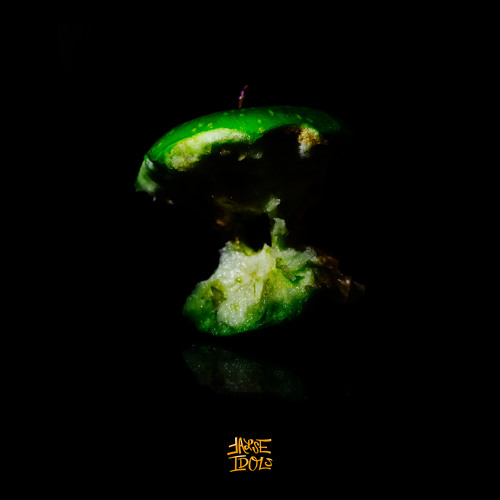
One of my favorite musical projects isn’t on a major label catalog. It’s an EP sitting quietly on SoundCloud since 2014 by Preach (formerly known as Mister Miller) called falseidoLs. Miller and I went to college together. The day I heard that project—zero marketing budget, no label backing, no vinyl pre-orders, just raw vision and 47 layered ad-libs bridging Miami soul and Andre 3000—I was floored by the unfiltered talent and creative conviction.
Real taste cannot be mass-manufactured by a prompt. When individuality dies, genuine creativity dies with it.
If you are ready to stop feeding the machine and start building work with compounding enterprise value, the operational standard must change.
Changing Perspectives
Creativity Operates in Seasons, Not Daily Quotas
High-caliber intellectual property is not meant to be churned out 365 days a year. Deep creative output requires an intake cycle—living, reading, observing—before the production cycle begins. Build around defined creative seasons, not an arbitrary daily posting streak.
Treat Generative AI as an Operational Loom, Not the Architect
Machine models can synthesize existing patterns, but they cannot manufacture distinct human taste, lived perspective, or original worldview. Use systems to organize structure, but keep your conceptual origins analog, tactile, and strictly human.
Originality Commands Real Pricing Power
Mass-market volume forces you into price competition with commodity freelancers. Building a distinct, recognizable narrative universe makes your work non-fungible. The market is saturated with templates; it is starving for distinct creative conviction.
Sever the Rented Feedback Loop
Social platforms are discovery nodes, not your creative home. Stop creating to appease an unseen algorithmic entity. Build owned archives, publish deep work, and treat external platforms merely as outposts to route attention into your sovereign ecosystem.
The internet doesn’t need another generic growth loop. It needs your actual perspective.
If your brand positioning or creative direction is currently caught in the commodity trap, let’s diagnose the breakdown.